Wednesday, 24 February 2010

Winter Olympics 2010: David Murdoch and curlers in play-off clash with Sweden

The GB quartet, skipped by David Murdoch, failed to secure an automatic place in the semi-finals after sliding to a 9-5 defeat by Norway in their final round-robin match.
That left them tied with Sweden with five wins and four defeats from the nine-match qualifying phase, which means the two teams must play off for the last remaining place in the semi-finals. Canada, Norway and Switzerland have already qualified.


Sweden defeated Britain 6-4 when they met on the opening day of the Winter Olympics tournament.

Whoever wins the tie-breaker will then face a tough challenge against in-form Canada in Thursday’s semi-finals. The hosts are the only team to come through the round robins with a 100 per cent winning record.

The one comfort for Murdoch, should he overcome Sweden, is that he has an excellent record against Canadian skip Kevin Martin, having beaten him three times on his way to winning the world title in Moncton last year.

But Murdoch will need to rediscover his touch after an off-colour performance against the Norwegians, who stole a two to take early control of the match. Murdoch gave up another steal of three in the seventh end before conceding after the eighth.

“I am pretty disappointed with that to be honest,” said Murdoch. “It was a great opportunity for us and we didn’t take it. We played some great ends there but we just had some slack shots. The score didn’t reflect the game.”

After their defeat, the British players faced an anxious wait as Sweden, needing to beat Denmark to force a tie-breaker, were taken down to the wire by their Scandinavian neighbours before Swedish skip Niklas Edin secured a 7-6 victory with his final stone.

“So now we play Sweden and we just have to see it as another game,” said Murdoch. “At least we are not out of it - that’s the main thing. Hopefully. we will win that game.

“If we win we would play Canada. We like playing them. It always brings the best out in us. It is not something we are scared of and if we played Kevin it would be one almighty game.”

Sunday, 15 November 2009

Blackout mystery casts shadow on Brazil's Olympics


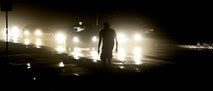
Into the dark days ago a massive blackout that plunged half of Brazil remains a mystery, casting a shadow over the country's energy policy and its plans to host the 2016 Olympics, experts say.
Tuesday night the outstage, which affected up to 70 million people, has proved an embarrassment for the government of President Luiz Inacio Lula da Silva.
After initially claiming transmission lines were at fault, then deciding that a storm must have caused a short circuit in supplies from Brazil's largest power plant, officials have been forced to backtrack from efforts to declare the incident closed.
The satellite monitoring agency, the National Space Research Institute, said it was impossible that lightning could have shorted power lines.
An electricity company said no damage the lines had been found, contradicting the energy ministry's official explanation.
As a result, the ministry, the National Electrical Energy Agency and the National Grid Operator were all given to late Sunday to provide detailed explanations of what went wrong under an order from the attorney general's office.
The office, part of the public federal ministry, said it wanted an analytical report within two weeks on the outage that identifies which officials were responsible.
Brazil's media, which covered the traffic chaos and widespread sense of insecurity engendered by the blackout, have also kept the pressure up, as have Lula's political opponents who see an chance ahead of presidential elections in a year's time.
An assertion by Lula that grid failures are an unavoidable fact of life, saying "only God can save us from further blackouts," earned criticism.
Marina Silva, a former environment minister who is positioning herself as a rival candidate to Lula's chosen successor, chief minister Dilma Rousseff, accused the government of "trying to avoid its responsibilities" by blaming bad weather.
Carlos Manuel Portela, an electrical engineering professor at the Federal University of Rio de Janeiro, told the Folha de S. Paulo newspaper that the storm explanation by the government was very unlikely.
"With the (global economic crisis), consumption is stable and it doesn't seem to me that climatic variations could have caused interference to this point," he said.
The doubts left in the wake of the outage have left Lula and his government on the defensive as they try to show the world that Brazil is ideally placed to host South America's first Olympic Games in seven years' time.
Questions over the reliability of the electrical grid are now being asked alongside others over the ability of authorities to stamp down on ever-present street violence in the host city of Rio.
Marcio Prado, an energy analyst at Santander bank, told the Estado de S. Paulo newspaper that Brazil's electricity generation would likely start hitting its limits in 2013, when demand would outstrip supply unless projected new power plants come on line.
"There is uncertainty over whether all those thermal plants will be functioning on their forecast dates, and even if they do, their costs will be expensive," he said.
Prado said 19 power plants projects were already running behind schedule.

Saturday, 7 November 2009

On London 2012 pushes cost to at least £12bn Olympic-sized overspend


An investigation has established that the announced sum of £9.325 billion for public spending on the London 2012 games substantially understates the true position.
The Government and other public bodies are spending at least an additional £2.7 billion directly on the Games and Games specific projects.
Much of the extra spending is hidden, has not been publicly announced or has been buried in obscure documents and reports.
The figures have been disclosed after a series of inquiries and Freedom of Information Act requests.
The finding appears to contradict claims by Tessa Jowell, the Olympics Minister, who told Parliament last year: "I have made it absolutely clear to all the many stakeholders in the Olympics that £9.325 billion is the absolute limit of public money, whether it comes from the lottery, the London council taxpayer or the Exchequer."
The extra £2.7 billion includes:
* £1.15 billion spent by Boris Johnson's London Development Agency (LDA) to buy and clean up the Olympic site.
* At least a further £359 million not publicly announced by the LDA, including £269 million in interest payments and £90 million in Olympic grants.
* £389 million for "Games-specific" transport improvements by Transport for London and Network Rail.
* About £60 million costs for Whitehall departments working on Games preparations and legacy planning.
* £240 million spent, or bid for, by local councils.
* A contribution of £110 million by the Homes and Communities Agency quango to the Olympic village.
* £280 million on Olympic-related grassroots and elite sport projects.
Almost £100 million in directly Games-related spending by a range of other public bodies, from the Lea Valley Regional Park Authority to the Arts Council and the NHS.
None of these amounts is included in the publicly-announced figure of £9.3 billion, which is paying for the construction of the Olympic venues, security, most of the Olympic village and other transport improvements.
Hugh Robertson, the shadow Olympics minister, said: "When [ministers] talk about the Olympic budget, it is an extraordinarily misleading term. There is really a number of different budgets that go far beyond the amount quoted."
Mr Robertson said he believed that even the £12 billion figure would prove a substantial underestimate.
"The security budget alone is underpinned by billions of pounds of further policing spend," he said.
Although ministers have insisted that the Olympics is "on budget," this claim applies only to the announced figure of £9.3 billion.
Miss Jowell has not misled MPs on this core spending, but, over the past year, there have been substantial rises in the cost of the extras, with the LDA's spend on Olympic land alone increasing by 16 per cent and the Homes and Communities Agency's spend on the Olympic village increasing by 23 per cent.
The revised figure of £12 billion means that the Olympics' call on the public purse has now increased almost sixfold from the original figure of £2.05 billion given in London 2012's bid document in Nov 2004.
In a series of requests, more than 50 public sector bodies were asked whether they had any Olympic expenditure that was not covered in the core £9.3 billion budget.
The Government insisted last night that some of the spending would have occurred regardless of the hosting the Games – albeit at a later date. However, all the projects that make up the £2.7 billion extra have been claimed by the spending body concerned as a direct consequence of the Olympics.
A spokesman for the Department for Culture, Media and Sport said: "We were always clear that there would be additional spending by other public bodies in addition to the main £9.3 billion allocation."
He added that the state could recoup some of its investment from land and property sales. "The Olympics will leave lasting benefits for the whole country. It is an investment in our future, not some sort of burden."

Tuesday, 3 November 2009

Ticket sales on Saturday to the Final 2010 Winter Olympics


The 2010 Winter Olympics for the final round of ticket sales begins Saturday.
There are more than 100,000 tickets in Vancouver are available for events, such as curling and hockey. They include seats to gold medal games.
The tickets will be sold on a first-come, first serve basis through the Olympic committee's Web site.
Arrangers are also putting the final touches on their ticket resale Web site, which they expect to launch to help people sell tickets they can't use.

Wednesday, 21 October 2009

BOA issues team funding warning

British Olympic Association (BOA) boss Andy Hunt has told national sporting bodies that plans for a 550-strong Team GB at the 2012 Games depends on cash.

The BOA is £4m short of the £8m needed for a team that size and if money is not found the team could be nearer 350.

"We'd like to have the most competitive team across all sports we can but we need to figure out the cost," he said.

"We want to enable people to get their head around the different dynamics and the costs of different team sizes."

Densign White of the British Judo Association said the London Olympics were a once-in-a-lifetime opportunity and should be seen as such.

606: DEBATE
Your thoughts on funding for Team GB
"My view is that we should send as large a team as we can," he said.

"£4m is the salary of a Premier League footballer. In the greater scheme of things that's not much."

"Efforts should and will be made to find that extra money.

"We do not want to bankrupt ourselves but as this is a home Olympics it is a once-in-a-lifetime opportunity."

Hunt insisted the announcement was just part of the consultation process and that no decisions had yet been made.

If you have 550 athletes you probably have 1,100 in the team including officials and the cost of kitting out 1,100 people is enormous

Andy Hunt
"What we did was set out a number of different scenarios from having a completely full team taking every home nation place, down to an option where we go for an incredibly competitive team with a reduced number of athletes," he said.

He also pointed out that the mere fact it was on home soil did not make it any cheaper putting the team together.

"There are as many disadvantages being at home as advantages. It is far more complex not taking the team away to one location," he said.

"If you have 550 athletes you probably have 1,100 in the team including officials and the cost of kitting out 1,100 people is enormous."